Artificial Intelligence: How IA is reshaping S&P 500 valuations?
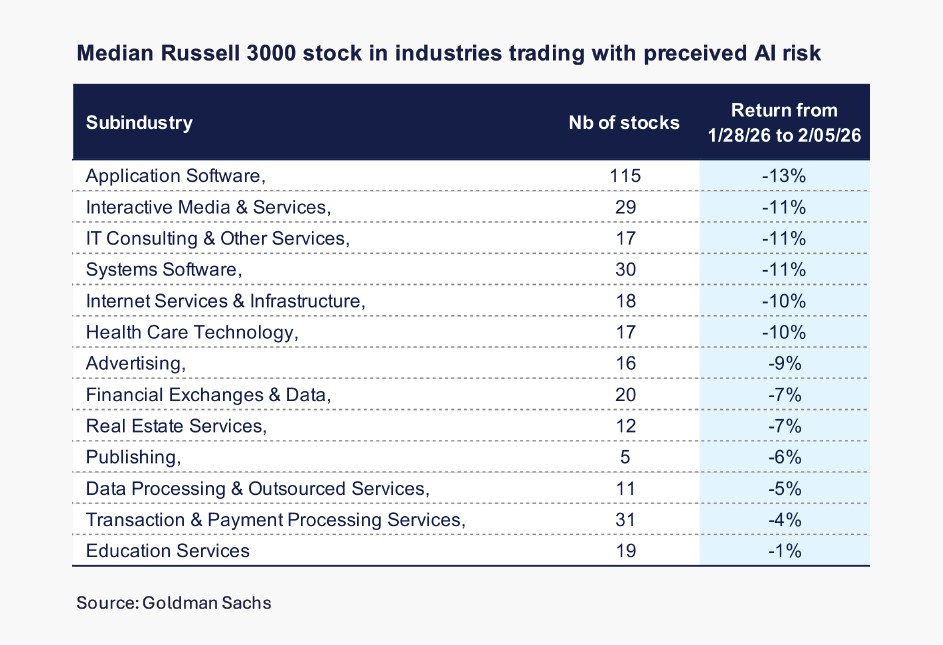
While the S&P 500 may appear stable, a deep reassessment of companies’ strength is underway. This shift, which began in the technology sector, now affects all industries. Investors are questioning which companies can survive in a world where artificial intelligence (AI) is everywhere and increasingly affordable. Today, a simple announcement of a new automated tool or AI-based agent can trigger a sharp drop in a company’s share price. Investors sell first and analyze later.
Published on 16 March 2026
Software sector at the forefront
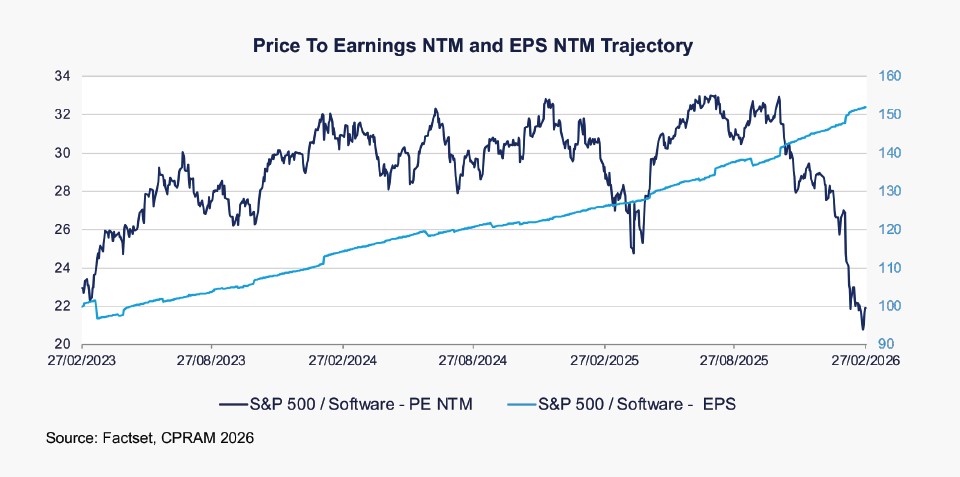
The software sector has been hit hardest. Over the past year, it has lost nearly $2 trillion in market value, a historic decline outside of recession periods. Why? Many fear a “SaaSpocalypse”: the idea that large AI models could replace or weaken software seen as “non-essential.” Valuations have collapsed: the price-to-earnings (P/E) ratio fell from 35 to 20, a level not seen in over a decade. This shows that investors now expect a significant slowdown, or even a lasting decline, in this sector’s growth.
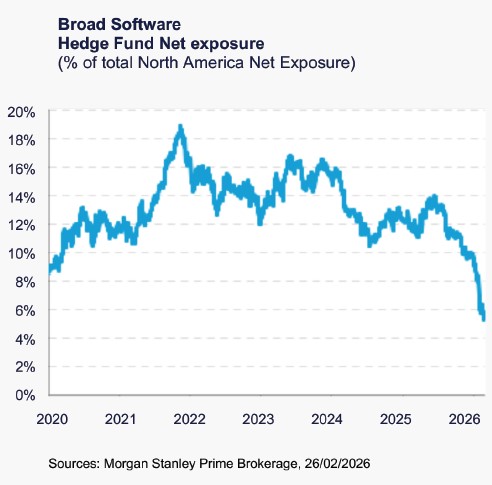
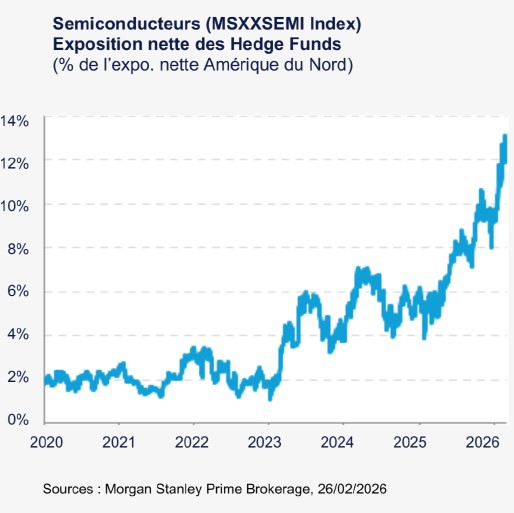
Hedge funds have amplified this trend: they have invested heavily in semiconductors (essential for AI) and reduced their exposure to software publishers. The “long semi / short software” strategy has become standard, favoring hardware and core models over traditional software applications.
But software is not dead
It’s important not to write off the sector too quickly. Enterprise software is often complex, integrated into business processes, governed by strict rules, and based on years of accumulated data. For example, in cybersecurity, AI’s effectiveness depends heavily on the quality of historical data. Switching costs, client trust, and network effects still protect many players.
AI fears spread to other sectors
The fear of AI is not limited to software. It also affects banks, wealth management, online booking platforms, video games, media, and logistics. Markets doubt these sectors’ ability to maintain revenues, especially if AI automates customer relations or data analysis.
For instance, the announcement of automated tax optimization tools was enough to push bank stocks down, even though they had been supported by rising interest rates. The question is simple: if AI handles client relations and analysis, what remains for companies whose value is based on human expertise?
A renewed interest in tangible assets: the “HALO Trade”
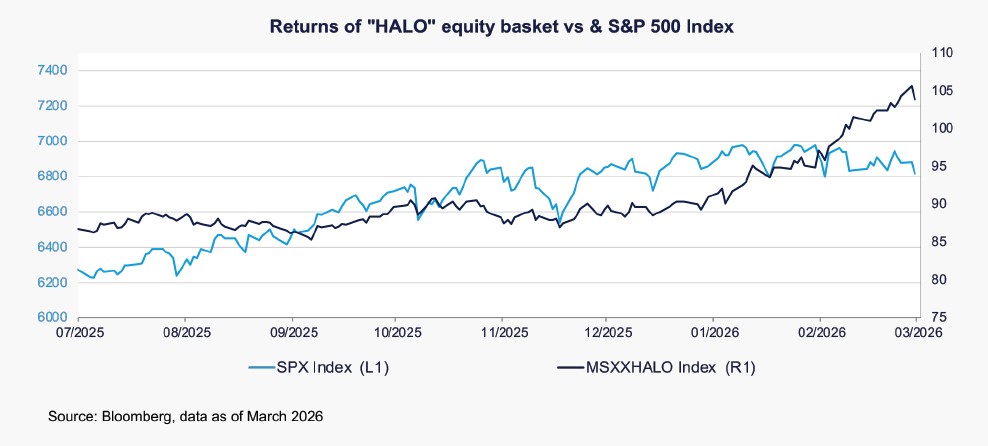
Faced with these uncertainties, investors are turning to sectors based on physical, hard-to-replace assets: telecoms, energy, mining, utilities. These sectors, long seen as less dynamic, are now safe havens amid AIdriven volatility. This is known as the “HALO trade” (“Hard Assets with Low Obsolescence”).
This trend has widened the gap between sectors, as not seen since the 2008 crisis. In Europe, this preference for tangible assets has helped markets resist better than in the US, which is more service-oriented.
A climate of nervousness and exaggeration
This volatility is fueled by alarmist statements. For example, Microsoft’s Head of AI, Mustafa Suleyman, recently said that most office tasks could be automated within 18 months. Such comments, echoed by dystopian analyses, increase market nervousness.
But economic history urges caution: major technological advances have often lowered costs, increased purchasing power, and created new opportunities. Imagining a lasting crisis while productivity rises assumes everything else (investment, consumption, public policy) remains unchanged, which is rarely the case.
Conclusion: a readjustment, not a crisis
In recent months, market reactions have been highly emotional: sell first, think later. The real question is no longer whether AI will transform the economy, but how fast and with what consequences. As with previous technological revolutions, reality will likely fall between excessive enthusiasm and doom. Companies able to integrate AI and enhance their offerings may emerge as winners. Those relying on simple intermediation or high margins will be more exposed.
Find out more