Confidence in the dollar continues to erode
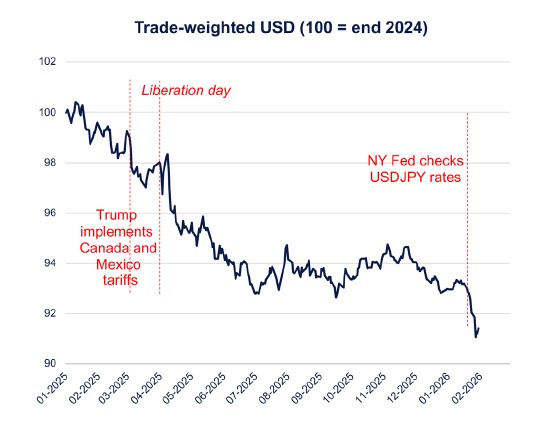
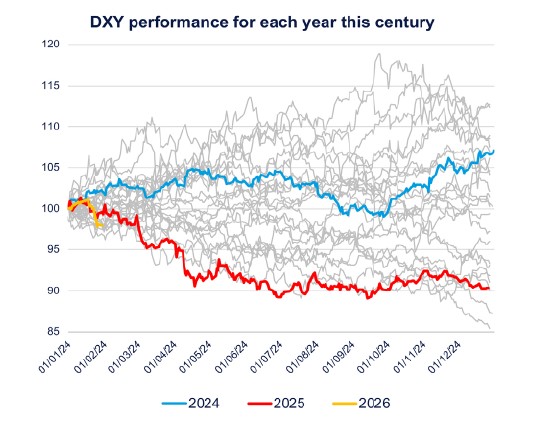
The dollar is making one of its worst starts in the 21st century, after appreciating in the first half of January. The causes of this depreciation are quite similar to those that were at work last year.
Published on 2 February 2026
In 2025, the US dollar depreciated throughout the first half of the year mainly following the announcements and implementations of tariff hikes, and in particular following Liberation Day on April 2.
As we wrote in May last year, "the plan unveiled on 2 April to reduce the US trade deficit at all costs is likely to at least slightly undermine the dollar's status as the dominant currency, since formany countries, the decline in dollar-denominated exports will reduce the interest in having dollar foreign exchange reserves. The unpredictability of the new US administration and the recurrent threats also weaken the dollar's status as the dominant currency and may in itself cause a decline in its international use.
Nevertheless, the dollar is not expected to lose its status as the dominant currency overnight, mainly because there is currently no other currency capable of replacing it". This has remained very true even though the dollar has remained stable on average over the second half of 2025: over this period, it appreciated against the yen but depreciated against the renminbi1. The renminbi is under upward pressure due to the fact that China's trade surplus has continued to grow, even exceeding 1% of global GDP.
In January 2026, two main factors fueled a further erosion of dollar confidence:
- The threats of annexation of Greenland, and the possible questioning of military alliances (NATO), have dented the image of the United States among some allies. Several European pension funds have announced that they are reducing part of their exposure to US assets. Academic studies show that countries that are militarily allied with the United States hold more US Treasury securities than others: questioning its alliances therefore puts its holdings at risk.
- On 23 January, the New York Fed carried out "checks" of the USD/JPY exchange rate, which suggested that the US authorities were close to intervening to make the yen appreciate against the dollar. A few days later, Donald Trump indicated that he was not worried about a depreciation of the dollar. On January 29, the U.S. Treasury released a report calling the renminbi "substantially undervalued" and calling for its appreciation against the dollar.
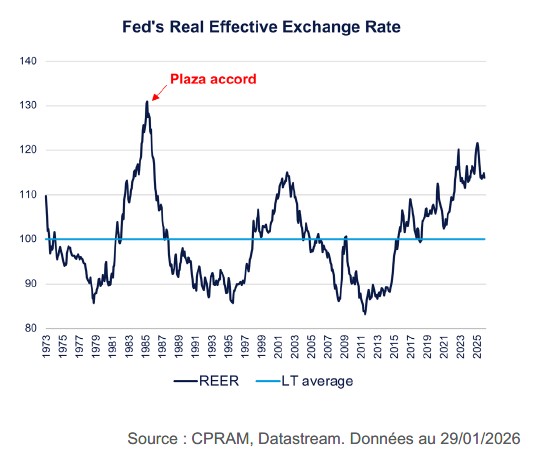
In reality, we must be aware that despite its decline of about ten percent since Donald Trump's return to the White House, the effective real exchange rate of the United States (i.e. the economic value of the dollar) remains high compared to its long-term average (the decline in 2025/2026 has roughly only erased the increase in 2024...) and still weighs on this country's foreign trade. There is no doubt that the US authorities will still try to lower the value of the dollar in the coming months, especially in the run-up to the midterms. This is fuelling the rise in precious metals and a rotation out of the US markets, among other things.
[1] The renminbi ("people's currency," abbreviated as RMB) is the official name of the currency in the People's Republic of China.
Find out more