Will food prices rise because of the war in Iran?
The rise in oil, gas, and fertilizer prices caused by the war in Iran raises the question of how food prices will evolve in Europe. This is reminiscent of the sharp increase in food inflation observed in 2022 following Russia's invasion of Ukraine. We are revisiting this topic here, particularly because food is a pillar of our European Strategic Autonomy strategy.
Published on 13 April 2026
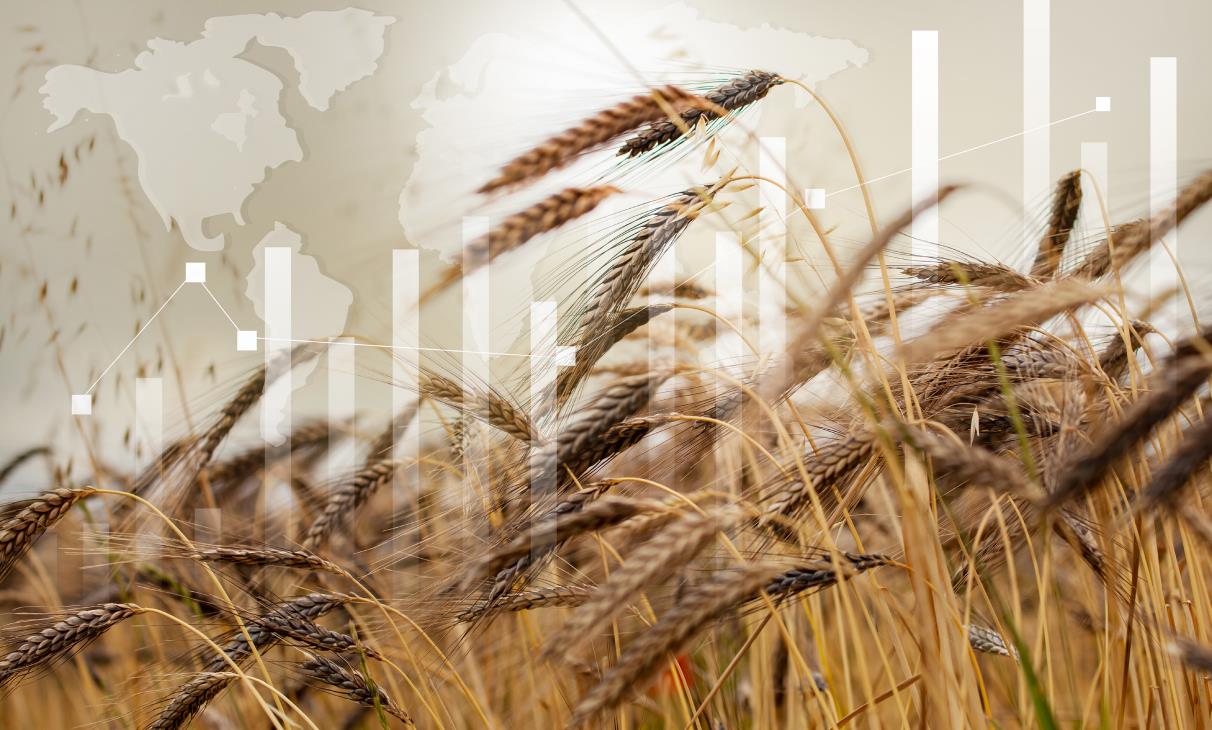
There is a fairly strong link between the price of oil and that of raw food commodities on global markets (often measured synthetically by the FAO index1) because oil is used at various stages of agricultural production and distribution (fuel for agricultural machinery, fertilizer production, transport, refrigeration, packaging). Given that the closure of the Strait of Hormuz is blocking, notably, the flow of a significant portion of global oil and fertilizer shipments, we could therefore expect a fairly rapid increase in food commodity prices, at least due to the increased costs of transport and refrigeration. On the other hand, we think that the rise in the price of certain types of fertilizers should only affect food prices with a lag.
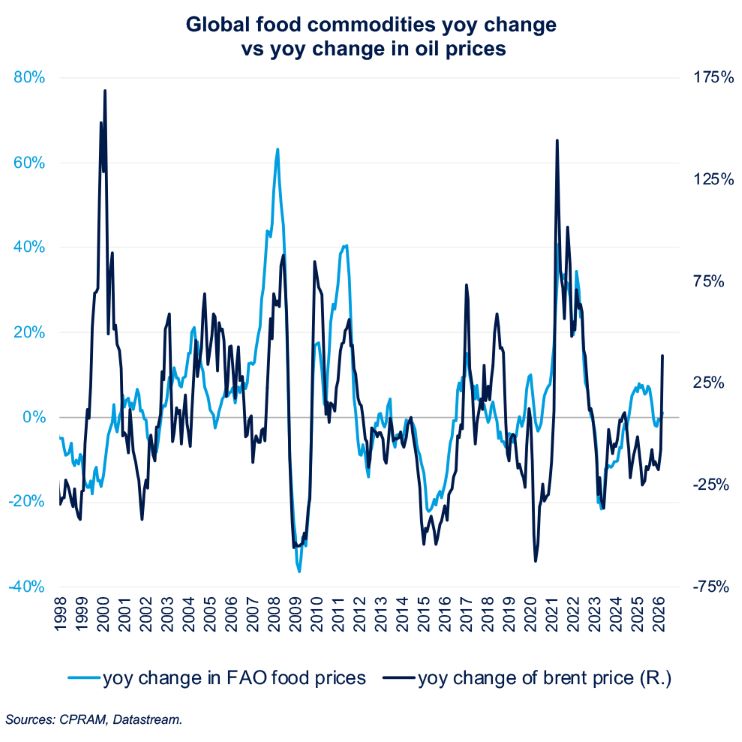
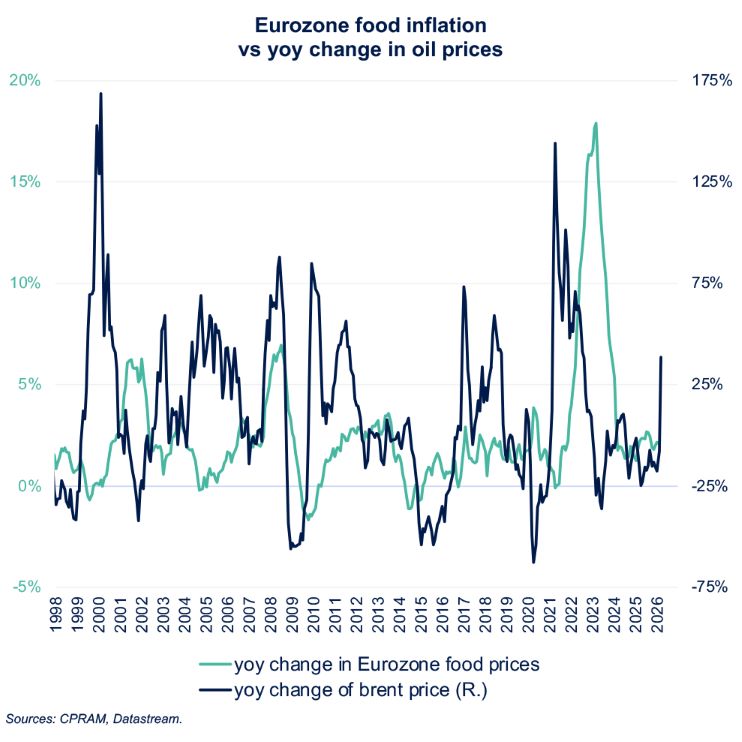
However, it is not clear that this will translate into a significant and rapid increase in household food expenditures in developed countries. The link between oil prices and food prices in the Eurozone, for example, is significantly weaker and less consistent than the link between oil and food prices on global markets. In fact, there have been several periods when oil prices rose sharply but food inflation in the Eurozone did not (2005/2006, 2009/2010, 2017/2018). There are several explanations for this: companies do not necessarily pass on wholesale price increases to their final selling prices, prices may be predetermined in certain distribution contracts, retail price adjustments may be delayed, substitution phenomena may occur, raw commodities constitute just a fraction of the production cost of processed food, and so on. Regarding restaurant prices, labor costs, and therefore the level of labor market tension, play a very important role, rather independent of oil prices.
In reality, it is quite likely that the war in Iran, especially if it continues, will eventually drive up food inflation in the eurozone, although the effect should be gradual and relatively limited.
In its latest forecasts, the ECB has only raised its food inflation forecast for the end of 2026 from 2.3% to 2.6% (and from 2.4% to 2.9% for 2027). However, uncertainty surrounding most of the mechanisms discussed here remains high, and central banks are expected to remain cautious for some time. As ECB economists explained recently, the topic of food inflation matters a lot for central banks as “unlike many other goods, the consumption of food is a necessity and accounts for a large share of the consumption basket. […] Many consumers buy food daily, and thus notice even small price changes quickly. As a result, food prices matter disproportionately for inflation perceptions and expectations.” The topic of food inflation will probably be central this year.
1. FAO : Food and Agriculture Organization
Find out more