Bond markets in Q4 2026: Why value added lies less in forecasting than in dynamic risk allocation?
ond markets are once again offering attractive yield levels. However, visibility on rates, credit and growth remains limited. In this environment, performance depends less on a single directional scenario than on the ability to continuously adjust exposure to the main risk drivers: duration, credit and liquidity.
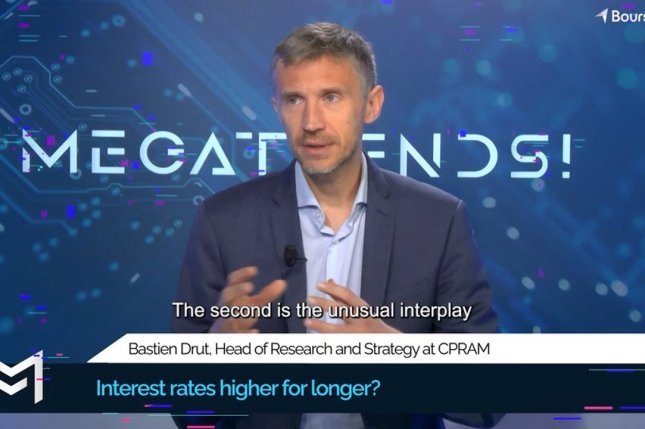
An interview with Zakaria Darouich, Portfolio Manager & Head of Multi-Asset Management, and Bastien Drut, Head of Strategy & Research, on the key issues facing fixed income investors at the end of the year.
Published on 14 September 2026

How are bond markets approaching 2026’ last quarter?
There are several sources of upward pressure on long-term yields as we enter the final months of 2026. First, the main driver of higher yields this year has been the sharp rise in oil and gas prices in the wake of the war in Iran, which has once again pushed inflation indices well above developed market central banks’ targets.
This must also be seen alongside the fact that debt and deficits in Western economies remain broadly high, while the ECB and the BoJ are still pursuing Quantitative Tightening at full pace. As a result, the volume of government bonds that markets need to absorb is unusually large. In addition, hyperscalers have started issuing heavily in long-dated dollar and euro maturities, further intensifying competition for capital.
Lastly, Kevin Warsh’s appointment as Chair of the Fed has led to a radical shift in communication. The impulse has been to leave greater room for bond markets to set the tone.
In this environment, what do you see as the main challenge for a fixed income investor?
The main challenge is no longer so much to identify a single scenario as to build a portfolio that can adapt. Markets can move rapidly from one regime to another, and it is becoming essential to navigate different stages of the cycle without locking allocation into a fixed stance.
Value creation therefore relies increasingly on flexibility. This means adjusting duration, increasing or reducing credit exposure, targeting the best-compensated segments, arbitraging across geographies and actively managing liquidity.
In a market where performance drivers can change quickly - inflation, monetary policy, energy, activity or credit sentiment - allocation discipline is once again becoming central. Performance stems less from a static view than from a sequence of coherent adjustments.
Does this mean that macroeconomic forecasting plays a less central role than it used to?
Macroeconomic analysis naturally remains important. It continues to provide an essential analytical framework. However, it can no longer, on its own, form the sole basis for investment decisions.
In the current environment, value added lies less in the ability to formulate a single scenario very early on than in the ability to adjust risk exposure in a reactive and disciplined way. In other words, what makes the difference is not just the forecast itself, but how it is translated into portfolio construction.
This approach is particularly relevant in fixed income, where the balance between rates, credit and liquidity can shift rapidly.
Credit now appears more selective than before. How do you explain that?
Some sectors are following specific trajectories in bond markets. The technology sector, and hyperscalers more broadly, are a clear example: they have significantly accelerated issuance this year, leading to a modest widening in spreads over the period. By contrast, the energy sector has benefited from higher oil and gas prices this year and has outperformed. Conversely, other sectors, such as autos, are facing increased competition from Chinese players, putting issuers under pressure. In short, sector dispersion has increased.
What does this mean in practical terms for managing a credit portfolio?
First, it calls for a more discriminating approach. Not all issues offer the same value, and not all market segments react in the same way to a shock in rates or growth.
In practical terms, this means being able to increase exposure when risk compensation remains attractive, but also to reduce it when spreads no longer adequately compensate for market uncertainty. This discipline is essential at a time when carry is becoming attractive again, but risk is not being rewarded evenly across the market.
Duration also remains a key issue. How should investors approach it today?
Rate moves are now even more dependent than before on the geopolitical backdrop and remain subject to the often abrupt and unpredictable policy reversals of the Trump administration. In addition, Fed policy — which often sets the tone for global bond markets — is becoming far less readable under Kevin Warsh’s chairmanship.
We are therefore witnessing a structural change in the way bond markets function, requiring much closer attention to the economic and political environment. This marks a major difference from earlier periods, when large market moves could develop in a relatively linear fashion over several months.
Should we conclude that a more flexible approach is now preferable to one that is overly static?
In the current environment, a flexible approach does indeed offer clear advantages. It helps avoid uniform exposure to risks that, today, are not rewarded consistently.
That flexibility does not mean a lack of framework — quite the opposite. It requires a clear analytical framework, disciplined execution and the ability to adjust the portfolio without losing overall coherence. In fixed income, it is precisely this combination of method and flexibility that makes it possible to navigate uncertainty more effectively.
Why does the current environment place so much value once again on tactical portfolio management?
Tactical portfolio management is regaining relevance for three main reasons.
First, current yield levels once again make it possible to build carry without relying exclusively on falling rates. Second, macroeconomic visibility remains limited, which argues for portfolios that can absorb regime shifts. Lastly, risk has become more fragmented across rates, credit, liquidity and, at times, currencies, which increases the value of tactical arbitrage.
In this environment, active allocation management is once again becoming a performance driver in its own right.
What message would you like to send to investors as the fourth quarter approaches?
As we approach the fourth quarter, the key challenge is probably not to formulate a single macroeconomic forecast. Rather, it is to build a portfolio that is clear, resilient and adaptable.
In a bond universe that has once again become supportive, the search for performance depends less on a directional bet than on a method. In our view, that method rests on three principles: flexibility, to adjust exposure to changing market regimes; selectivity, to target the segments where the risk/reward profile remains attractive; and discipline, to preserve allocation consistency over time.
It is this capacity to adapt, more than the search for a perfect scenario, that seems decisive to us in the current environment.
Find out more