Markets and strategies
Gold, reserves and mines, how to understand the current surge?
As gold surges and demand stays strong, we meet Arnaud Du Plessis, a natural resources specialist at CPRAM, to examine what’s behind the rise and where prices may head next.
Published on 3 December 2025
Could you explain where the price of gold stands today?
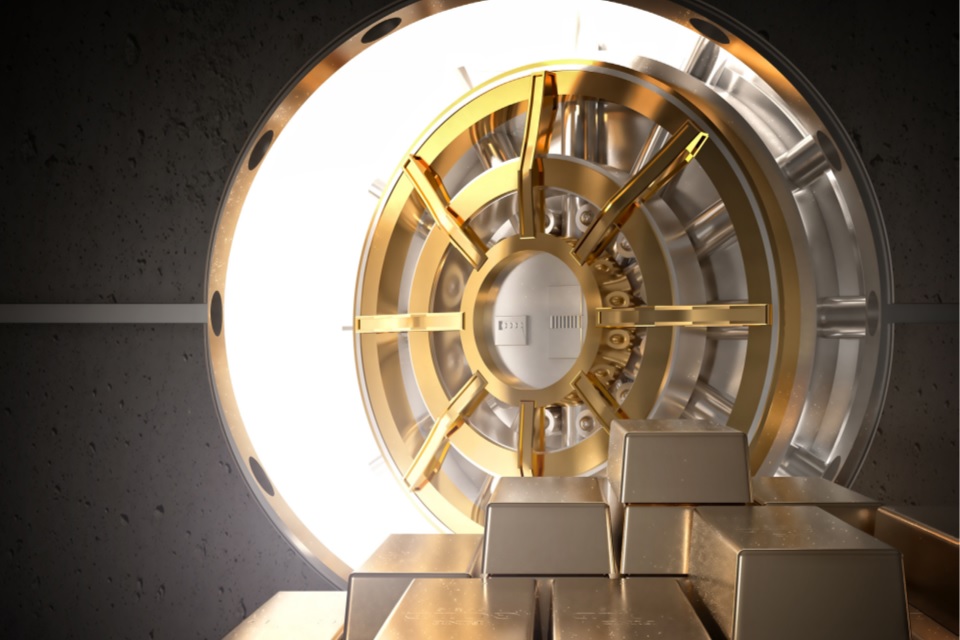
Gold, which had already climbed 34% in 2024, reached a new high of $4,381 per ounce in early November, representing roughly a 50%1 increase year‑to‑date. The market has since steadied, while demand continues to be supported by favourable geopolitical and macro‑financial factors.
How do you explain this dynamic?
This trajectory can be explained thanks to a combination of several factors.
Economic uncertainty — driven by rising government debt, US budgetary paralysis and concerns over the Federal Reserve’s independence — has supported the gold rally.
Central banks, notably in emerging economies such as China and Russia, have been central to this trend, reallocating portions of their official reserves from major currencies (notably the US dollar) into gold. The IMF reports that these countries’ physical gold holdings have risen by about 161% since 2006, versus roughly 50% growth between 1955 and 20052. Such purchases largely reflect a desire to diversify away from dollar denominated assets; an ECB3 report shows gold accounted for roughly 20% of global central bank reserves as of June 2025, compared with about 16% for the euro.
At the same time, gold is moving from a crisis hedge to a structural diversification asset. This shift is prompting some investors to rethink the classic 60/40 mix in favour of a 50/30/20 split — 50% equities, 30% bonds and 20% real assets (including a 10% gold allocation) — an adaptation of the ‘50/30/20’ framework popularised by Elizabeth Warren.
How high can the price of gold go?
While some analysts — including Goldman Sachs4 — forecast gold at $5,000/oz, a scenario we consider credible, we expect demand to remain robust, partly driven by FOMO. Continued central bank buying should consolidate the long term build up of official reserves, which remain relatively low at some institutions (notably the People’s Bank of China). A World Gold Council survey shows 95% of central banks plan to increase their gold holdings over the next 12 months, with none intending to reduce them5. By contrast, persistently high prices may weigh on jewellery demand..
Given the current level of gold, what are our thoughts on this sector?
The gold market and its value chain are complex and exposed to numerous unpredictable shocks. Beyond the intrinsic value of physical bullion, which follows the spot price per ounce, gold mining deserves close attention: miners’ results move directly with the metal’s price and offer an alternative way to gain exposure. Current average all‑in sustaining costs are about $1,500/oz6, so every dollar above that level feeds directly into margins. The recent rally in gold has therefore materially improved miners’ margins and earnings prospects, making the sector particularly attractive.
1. CPRAM source as of November 27, 2025
2. World Gold Council, Gold Demand Trends Full Year Q2 2025
3. The International role of the euro, BCE, june 2024
4. Diversify into commodities, especially gold, OCIM september 2025
5. Central Bank Gold Reserves Survey 202
6. https://www.gold.org/goldhub/data/aisc-gold
Find out more