Why is gold rising despite the increase in long-term interest rates?
After two record-breaking years (+27% in 2024 and +65% in 2025), gold is experiencing a rocky 2026.
Published on 25 August 2026

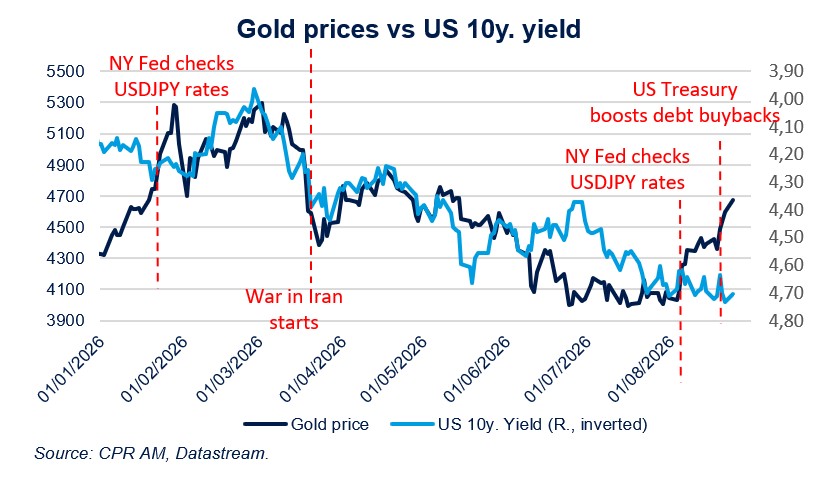
The primary reason for this has been the sharp rise in bond yields in the wake of the war in Iran. Indeed, rising rates have undermined the relative appeal of gold, a non-yielding asset. Yet, gold rebounded strongly in August, even as US and German long-term rates approached multi-decade highs. This divergence can be explained by three main factors:
1. The US administration's desire to limit the dollar's value
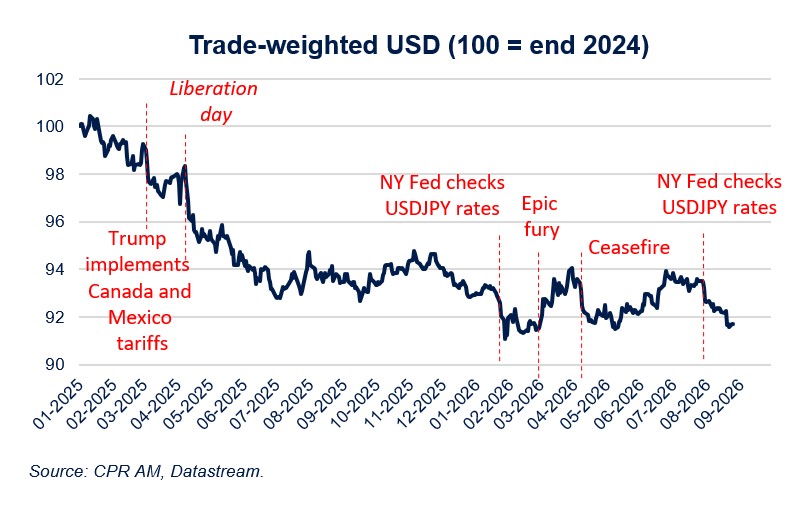
Just as it did in January, the New York Fed conducted "rate checks" on the USD/JPY exchange rate in late July. This time, however, the Treasury instructed it to intervene by purchasing yen. This move—officially prompted by the yen's weakness—can be interpreted as part of a broader strategy by the US Treasury to actively manage the dollar's value. An administration that actively intervenes in currency markets to steer its currency sends a clear signal to investors: the dollar is no longer subject solely to market forces but is becoming a tool of economic policy. And, all else being equal, a depreciating dollar is positive for gold. In any case, this is what triggered the initial leg of gold's rally in August.
2. Fears regarding the trajectory of public debt, brought to a head by Bessent's announcement
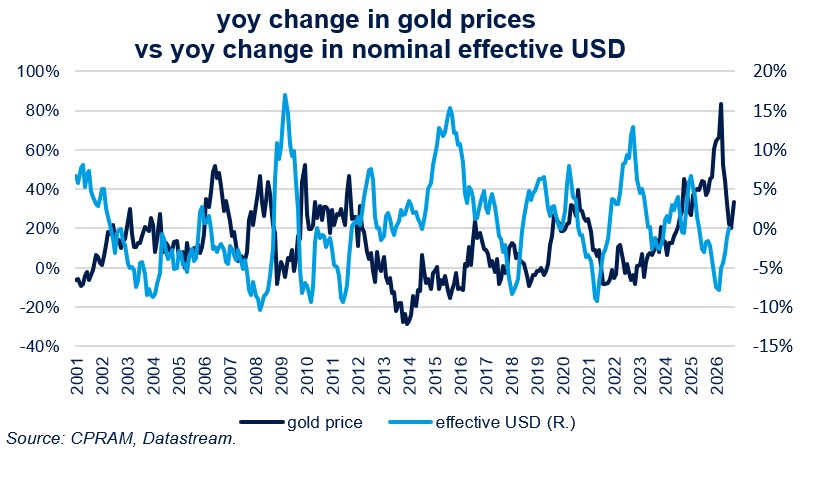
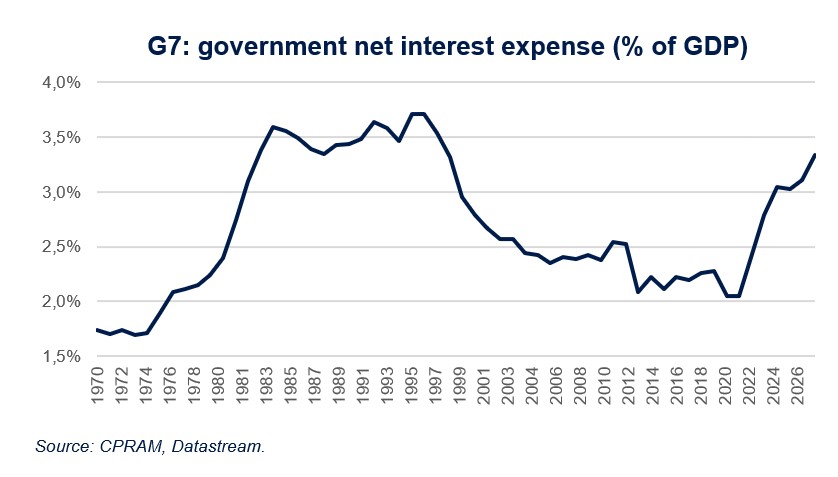
On August 19, just as US public debt crossed the $40 trillion mark, the Treasury announced it would double its long-term bond buyback operations, raising the volume to at least $4 billion per operation. Markets likely interpreted this as an implicit admission of fragility rather than a sign of control; the dollar fell sharply in the wake of this, while gold—an asset that cannot default—was viewed as a safe haven amidst the loss of confidence in states' ability to honor their debt without resorting to some form of financial repression. This fueled the second leg of gold’s rally in August.
3. The return of the trade war
On July 24, the Trump administration "rolled over" existing tariffs (following the expiration of Section 122 measures) while introducing new ones (under Section 301). Crucially, the US raised tariffs by 50 basis points on a small portion of Canadian imports, triggering an escalation. Further announcements appear to be in the pipeline. A resurgence in trade tensions could weigh on the dollar (see our note "A Regime Change for the Dollar?" from May 2025)—much like during the "Liberation Day" events of April 2025—which would benefit gold.
Ultimately, gold rose despite higher interest rates, driven primarily by US Treasury policies—such as foreign exchange market interventions and public debt management—that reignited the trend toward de-dollarization.
Find out more